
Catharsis (from the Greek kátharsis, “purification”) is a process of emotional release and inner purification that can bring relief or balance.
Through a primal form of artistic expression, the artist frees herself from the fears, conflicts and unconscious drives that marked the most significant moments of her life, leading the viewer into intimate and introspective places. Raising constant questions and prompts for reflection, she follows a winding path that sways between consciousness and the unknown, between the dreamlike and the earthly… Only at the end of this journey will the artist reveal to us the solution to an existential enigma.
Solo exhibition — Palazzo Valentini, Rome — 9-18 June 2026

Infanzia (Childhood)
148 × 148 cm — Oil, acrylic and enamel on canvas — 2023
Infanzia (Childhood) most powerfully embodies the concept of entelechy: that which, in one’s mythobiography, holds within itself the highest potential to unfold, what the Romans called in fieri (in the making) — what each of us is destined for in our own becoming.
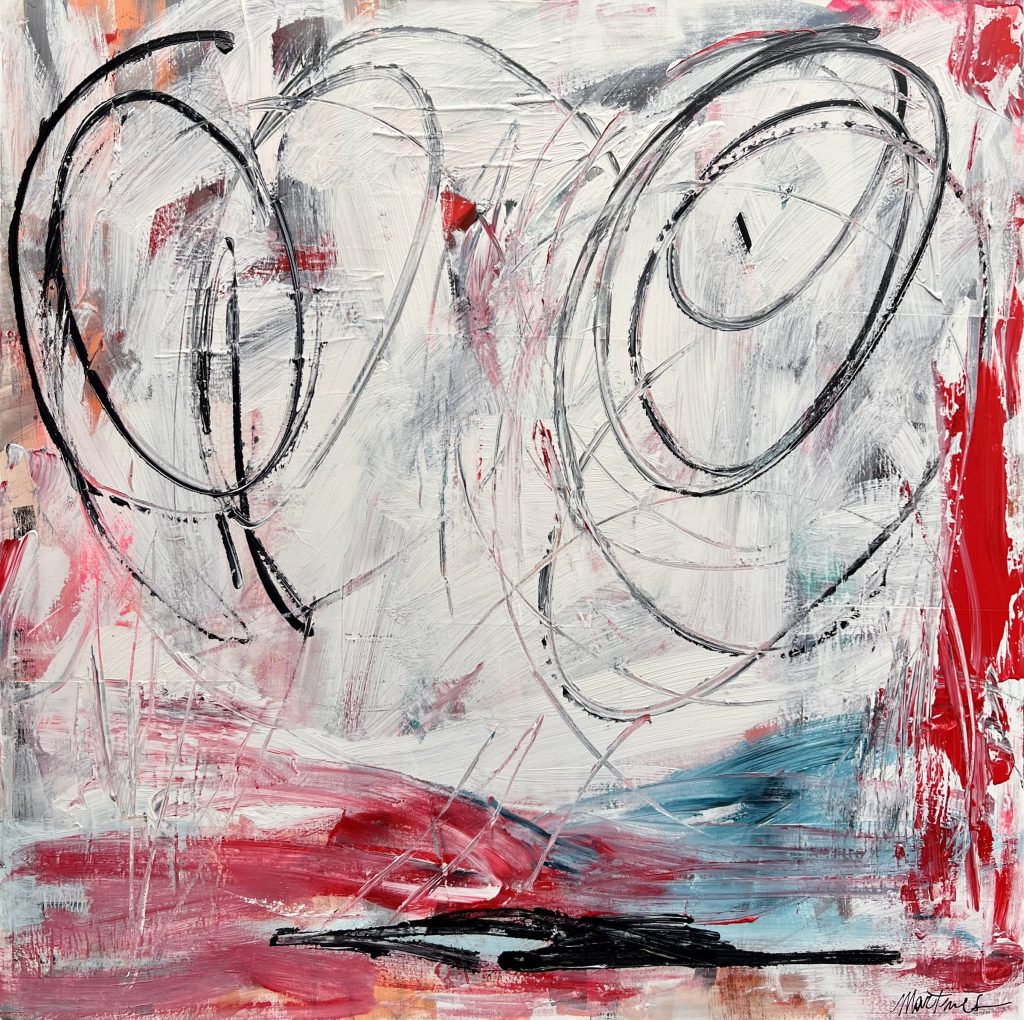
Identità (Identity)
100 × 100 cm — Acrylic and natural pigment on canvas — 2024
Martines searches for her origins and is both attracted to and repelled by the cycle of life, which she inwardly hopes will move in the direction of love. Hers is not a romantic, light, futile or vain love: it is a search for identity that converses with the little girl within her and finds expression in a mature and fierce art.
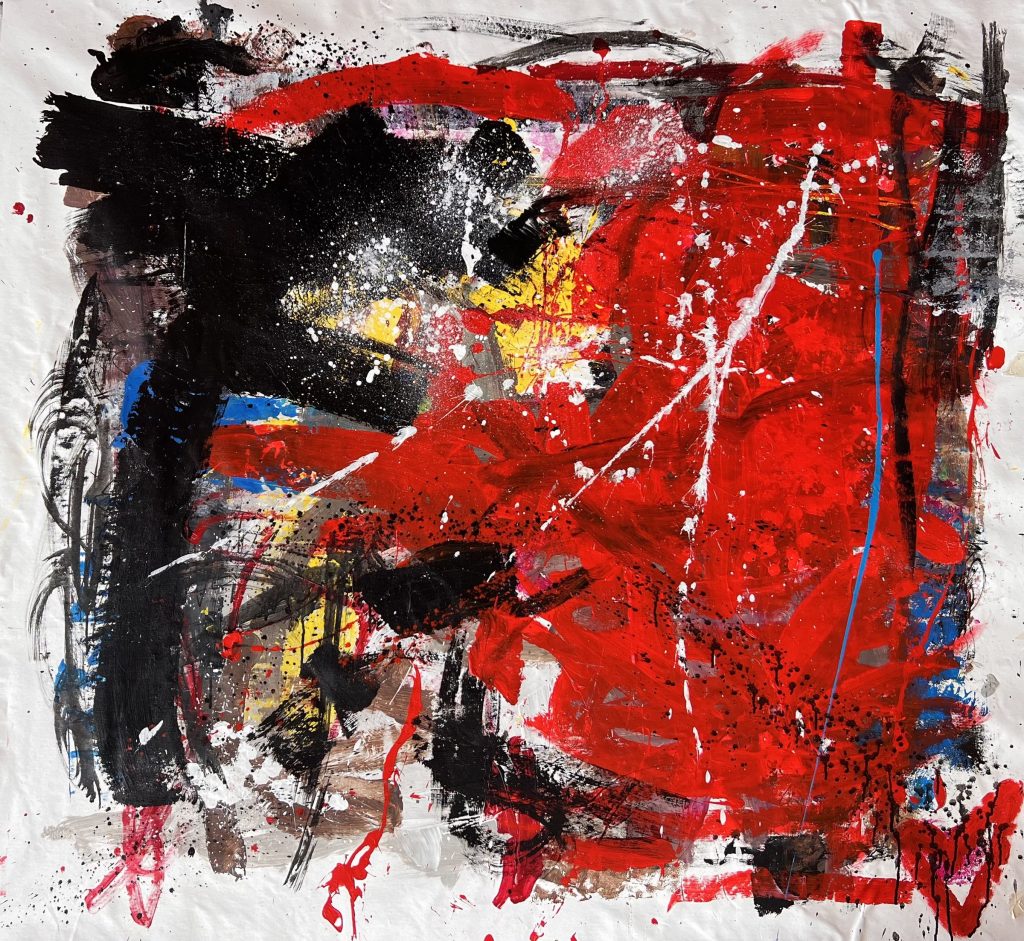
Eros
135 × 140 cm — Acrylic and enamel on canvas — 2024
Eros is expressed through two intense, strong colours: black and red. They are opposing elements, not juxtaposed, revealing a pride of feeling that turns into a powerful confrontation: she is in love with love and its promises; he, black, is the arbiter and measure of her emotions, able to harmonise opposites in union with absolute energy.
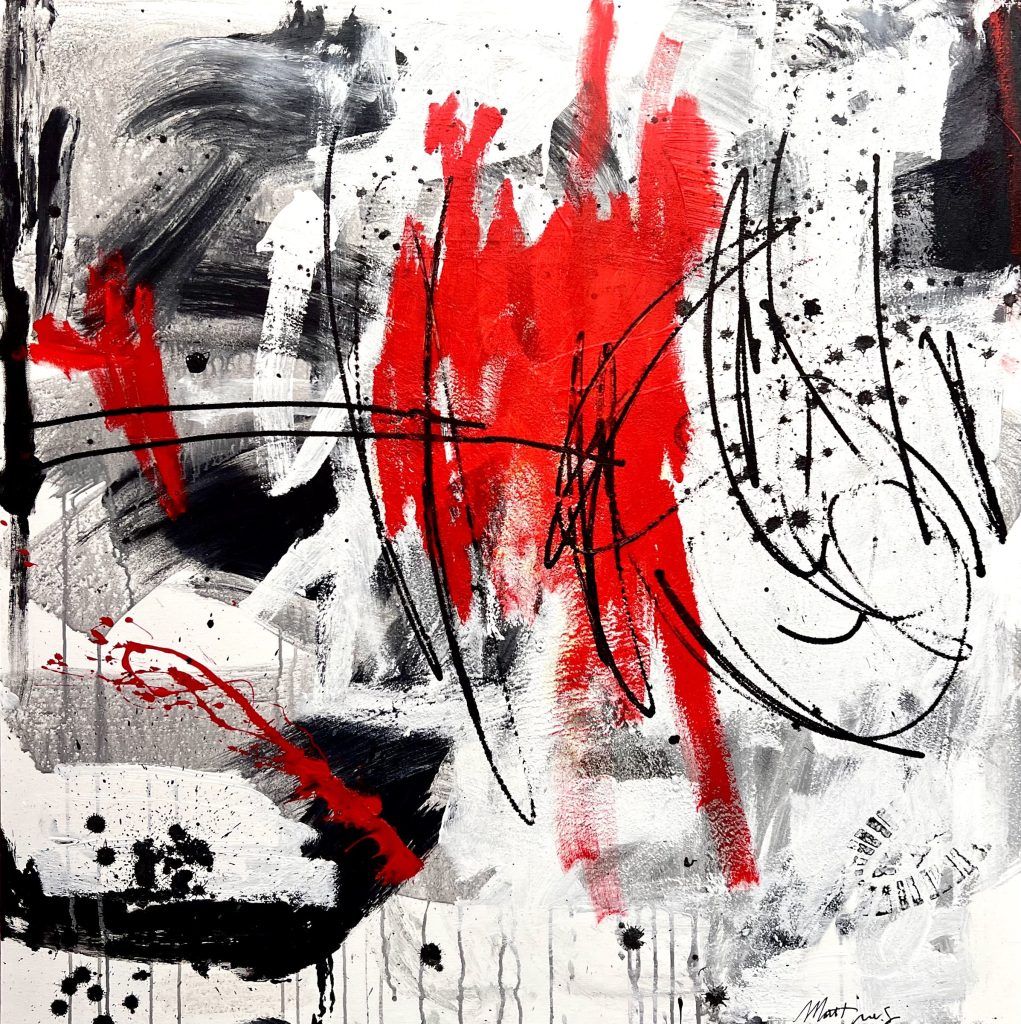
Vitium
100 × 100 cm — Acrylic and natural pigment on canvas — 2025
The work depicts, through colour, the twilight of the will: the circles recall a stylistic signature of Roberto Crippa, the yellow Emilio Vedova. In this ongoing search the artist’s will is overwhelmed by vice, struggling against the virtues, in which instinct prevails.
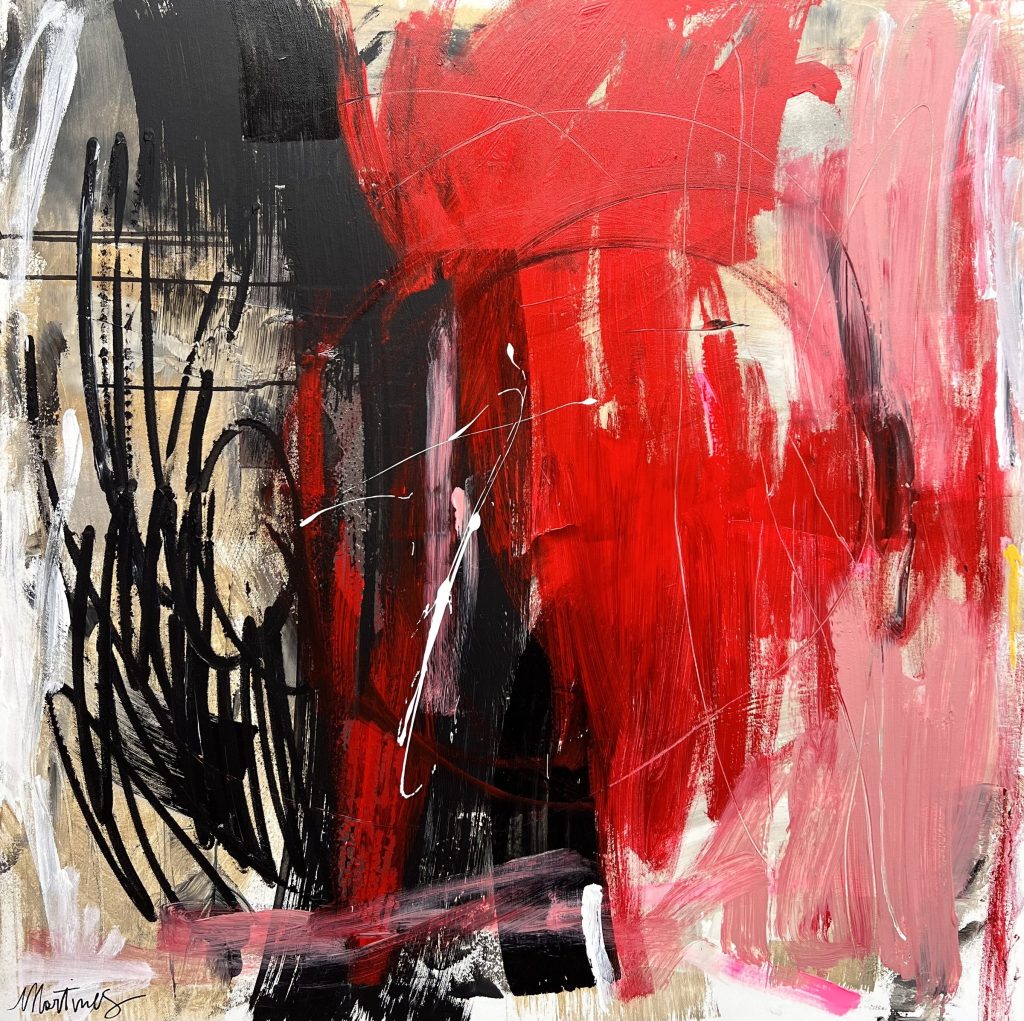
Femininum
100 × 100 cm — Oil, acrylic, metal (bronze), natural pigments on canvas — 2025
A primordial element which, according to tradition, separated from the masculine element. This is not only an aesthetic search but a deep meditation on what it means to be a woman, leading humanity back to the primal level, to the affirmation of an identity that escapes labels and claims its own space.
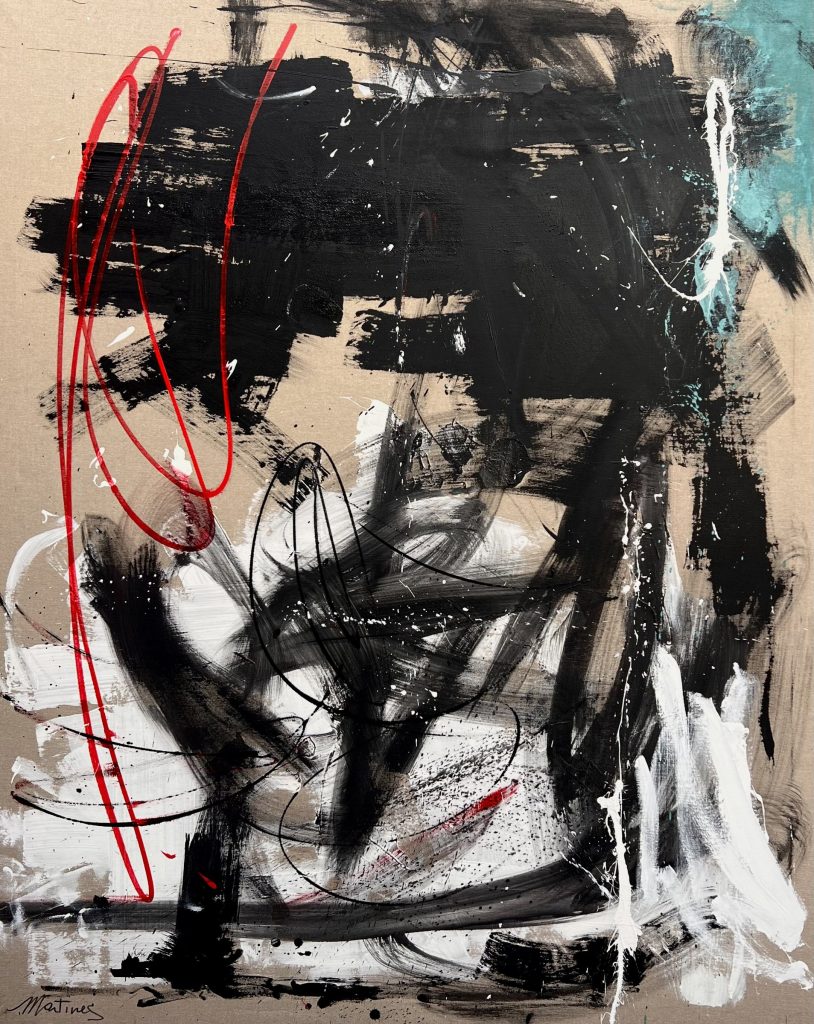
Temet nosce
140 × 174 cm — Acrylic and natural pigment on raw canvas — 2026
Temet nosce, “know thyself” (Socrates): a phrase cut from Hermes’ longer one, “know thyself and your divine nature”. Here black represents, as never before, her abyss as a woman, with which she is in constant dialogue and towards which she feels both attraction and repulsion, like Jeanne Duval and Madame Sabatier for Baudelaire.
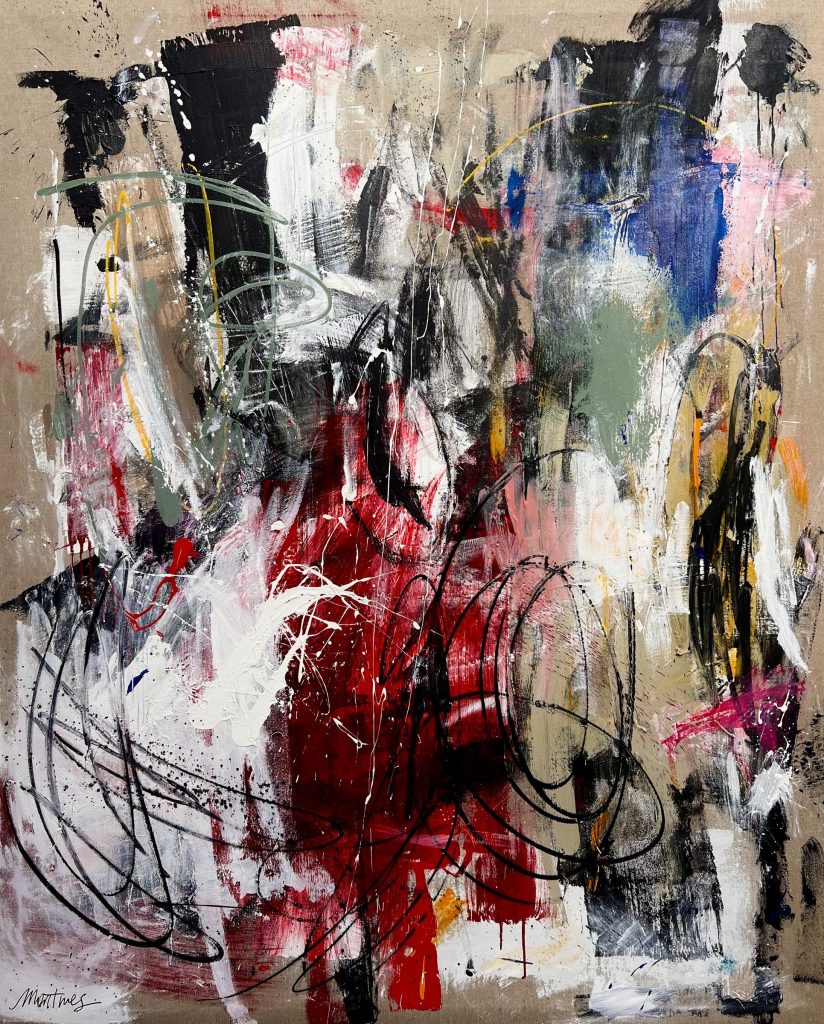
Libero arbitrio (Free will)
140 × 175 cm — Acrylic, enamel, natural pigment on raw canvas — 2026
From the Latin liber: book, but also free. Hence the vision of Francesca Diana Martines, pointing to a freedom earned and achieved through study, the foundation of every artist on the way to becoming a master. Her free will is not circumstantial but reflects a deep and personal vision.
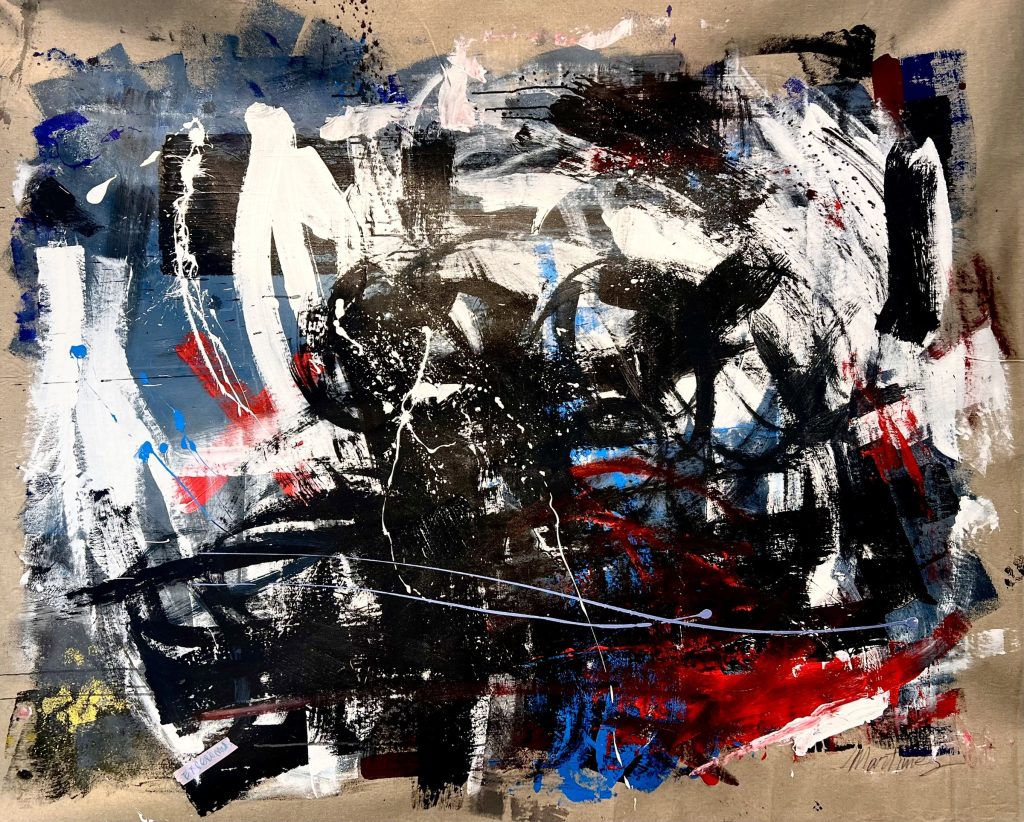
Experimentum
c. 140 × 147 cm — Acrylic, enamel and oil on raw canvas — 2026
Ex, from the Latin for “away from”, and perior, periri, “to attempt, to test”. The verticality of the work matches a lofty aim: to free herself from being a mere artist and become a master. The raw canvas corresponds to her true self, while white (albedo) represents completeness.
The artist’s poetics
Dr Nicoletta Rossotti — historian, curator and art critic
From her early figurative subjects, with an attention to the Scuola Romana of the 1970s that echoes in her thoughts and works, Martines’s language, in continuous osmosis, begins to work through gestural abstraction.
She recovers and experiments with the linguistic codes of painting, bringing with them a kaleidoscope of references to and contaminations from great masters of the past — Emilio Vedova, Jackson Pollock, Giosetta Fioroni — fusing traditional tendencies with contemporary languages.
The artist’s identity is established and contained in a poetics and a pictorial signature that allow a dialogue both aesthetic and conceptual in nature, in which the intellectual and chromatic inflections are very strong.
Francesca Diana Martines’s modus operandi traces a path of continuous experimentation and evolution, investigating the infinite possibilities of painting. A strong painting, at times material and always mature.
The artist’s first solo exhibition, Kátharsis, presents a journey of liberation and purification, an ascetic process that the artist raises to a new pictorial dimension and a search for the self.